IT Inventory Is Not Just Stock Control: It Is Compliance Infrastructure
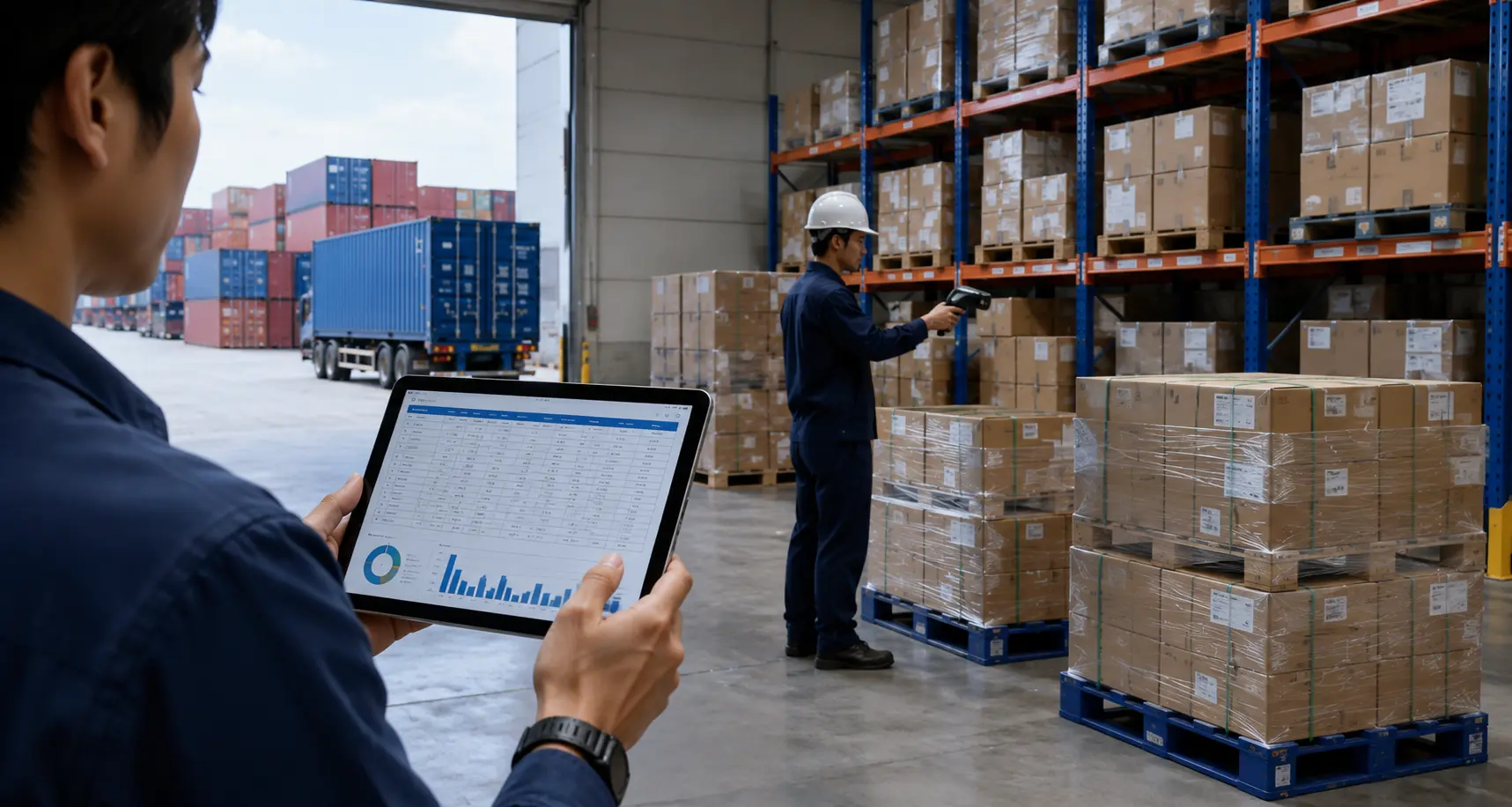
For companies operating bonded warehouses, bonded zones, bonded logistics centers, KITE facilities, export-import operations, excise-related businesses, or Special Economic Zones, inventory is not only a warehouse matter. Inventory is part of compliance.
A small mistake in recording goods receipt, goods issue, stock balance, customs documents, material conversion, or production movement can create significant risk: report corrections, audit findings, delayed service, and customs or tax exposure.
That is why IT Inventory should not be treated as ordinary stock software. It must connect company operations, audit readiness, and administrative obligations to relevant authorities.
What IT Inventory means for bonded businesses
IT Inventory is a computer-based inventory information system used to record and trace goods movement continuously. In customs facility environments, it helps companies show data for receipt, issue, usage, production, adjustment, and stock balance clearly.
For bonded warehouses and similar facilities, Indonesian Customs guidance states that IT Inventory for goods receipt and issue should at least be used continuously. In Special Economic Zones, there are also rules related to the utilization and criteria of computer-based inventory information systems for business entities and operators.
In other words, the system should not merely exist. It should be used, maintained, and able to show the data needed during supervision or inspection.
Why spreadsheets are not enough
Spreadsheets may help at an early stage, but they become fragile when transaction volume grows, users multiply, and documents become more complex.
Common risks include:
- Duplicate or inconsistent document numbers.
- Physical stock and system stock mismatch.
- Goods movement without reliable audit trail.
- Users changing old data without control.
- Material-to-finished-goods conversion not properly documented.
- Reports difficult to generate by period or inspection need.
- External system integration not ready.
For bonded companies, these are not just administrative problems. They affect data credibility in front of authorities.
What a serious IT Inventory system should include
A robust IT Inventory application usually needs:
- Item master data with code, name, unit, classification, HS code, and technical attributes.
- Supplier, customer, document, warehouse, location, and user masters.
- Goods receipt records based on customs or supporting documents.
- Goods issue, usage, return, scrap, and adjustment records.
- Movement between locations or warehouses.
- Bill of Materials or raw-material-to-finished-goods conversion.
- Stock cards and balances by item, location, document, and period.
- Audit trail showing who did what and when.
- Role-based access so users only access authorized modules.
- Periodic reports ready for inspection.
The more complex the operation, the more important it is to design the data structure correctly from the beginning.
CEISA 4.0 and INSW Gateway integration
Customs digitalization keeps moving forward. Indonesian Customs lists many application-service policies related to CEISA 4.0 mandatory implementation stages. DJBC planning documents also mention transactional-data-based TPB e-Monitoring, centralization and standardization of IT Inventory data, and development of KEK IT Inventory monitoring integrated with SINSW.
For companies, this means IT Inventory should not become a data island. The system should be prepared to connect with government service ecosystems when required.
For bonded companies, integration may involve host-to-host communication with Customs through CEISA 4.0. For Special Economic Zones, integration may involve INSW Gateway or SINSW according to the applicable service scheme.
This kind of integration requires technical readiness: data structure, document mapping, API handling, validation, exchange logs, retry mechanisms, and delivery status monitoring.
Compliance also means audit readiness
A good system should answer audit questions quickly:
- Which document brought this item in?
- When did the item leave?
- Which production process used the material?
- What is the remaining balance per document?
- Who made the adjustment?
- Why is there a variance?
- Can reports for a specific period be regenerated?
If all answers are scattered across files, chats, and manual notes, audits become exhausting. With proper IT Inventory, companies can present data with more confidence.
Business impact beyond compliance
IT Inventory is not only about meeting obligations. A strong system also supports daily operations:
- Warehouse teams know actual stock.
- Production teams know material availability.
- Export-import teams keep document data cleaner.
- Finance and tax teams work from more consistent numbers.
- Management sees variance risk earlier.
- Compliance teams have a stronger data foundation.
When inventory data is accurate, operational decisions become faster.
Onyet Corporation can help
Onyet Corporation has experience building IT Inventory applications for bonded-business needs, including bonded warehouses, exporters, importers, excise-related operations, and other facility schemes.
We understand that this kind of system must support daily operations while also considering the latest requirements from Indonesian Customs and the Ministry of Finance. Onyet can also help design host-to-host integration with Customs through CEISA 4.0, and integration through INSW Gateway for Special Economic Zone needs according to the applicable scheme.
If your company is preparing, improving, or modernizing IT Inventory, contact Onyet Corporation to start mapping system needs, data structure, reporting, and integration.
References: