Why Your Business Must Migrate to Industry 4.0 Now: The Imperative of Moving Fast
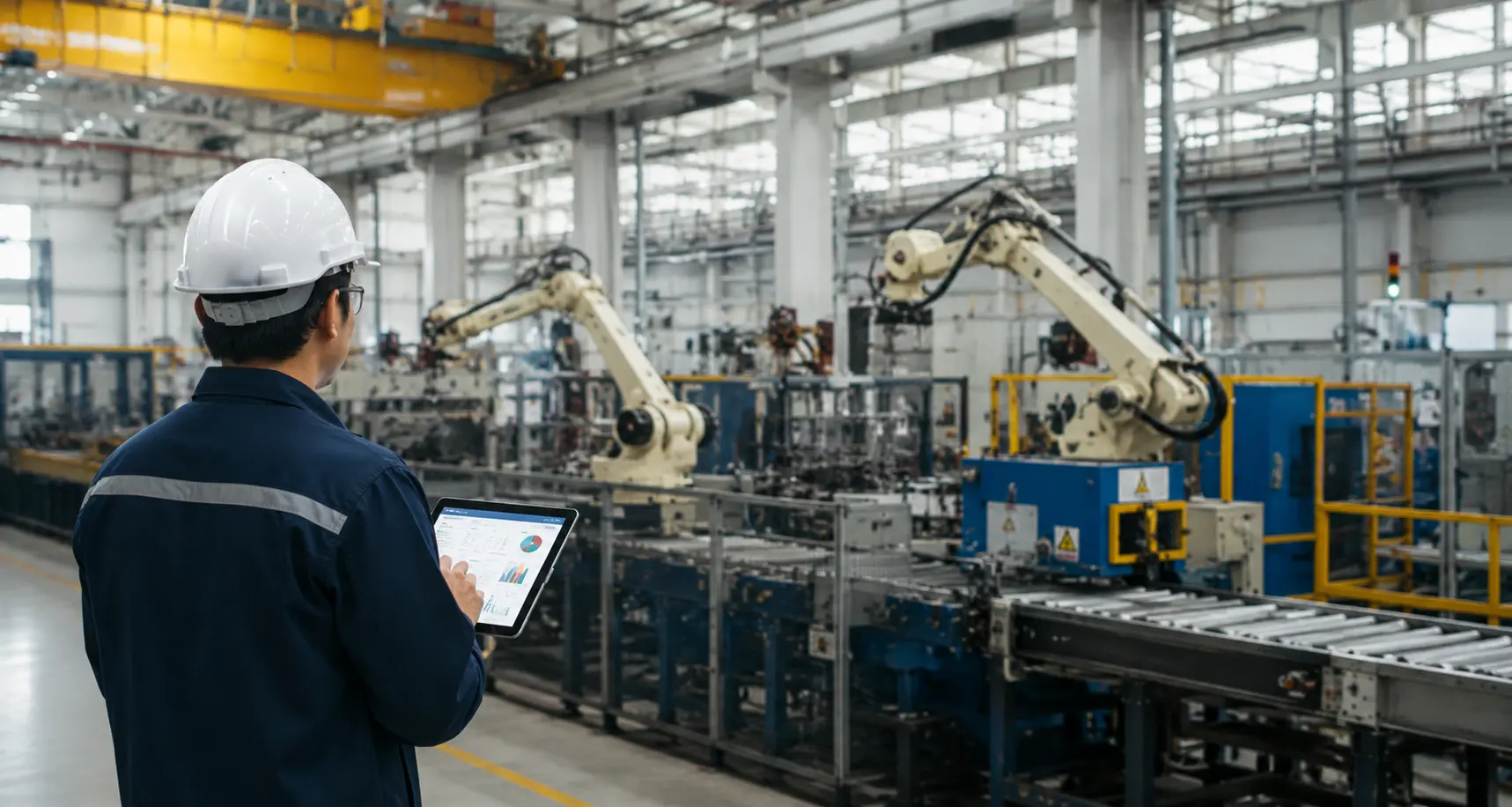
Today’s business landscape does not move along a predictable, linear path. We are in the midst of the fourth industrial revolution, widely known as Industry 4.0. This is not just a technological buzzword discussed in boardrooms. Industry 4.0 represents a fundamental shift in how businesses create, distribute, and optimize value through the integration of digital technologies.
From advanced automation, artificial intelligence (AI), and Big Data analytics to Cloud Computing and the Internet of Things (IoT)—these technologies are reshaping global competition. Market leaders from a decade ago can be displaced in months if they are slow to adapt.
For business owners, chief technology officers, and decision-makers across all sectors, the question is no longer “Do we need to migrate to Industry 4.0?”, but rather “How fast can we do it?”.
In this article, we cover the urgency of digital migration, why delay is the single greatest risk to your business survival, and how you can initiate your transformation journey with Onyet Corporation.
Understanding the Essence of Industry 4.0
Before discussing the urgency of transformation, it is important to understand what Industry 4.0 actually represents. Unlike the digital advancements of Industry 3.0, which introduced basic computerization and isolated electronic machines, Industry 4.0 places interconnections at its core.
In an Industry 4.0 ecosystem:
- Interconnected Systems: Sales, supply chain, production lines, logistics, and customer support are integrated in real-time within a unified data platform.
- Data-Driven Decisions: Business choices are no longer guided solely by intuition. Instead, they are backed by accurate, predictive analytics and visualization tools.
- Intelligent Automation: Applications and machinery do not merely run rigid programs. They optimize workflows autonomously using adaptive algorithms.
Why Your Business Must Migrate to Industry 4.0
Delaying technological adoption risks letting your business fall behind more agile competitors. Here are the primary reasons why migration is a necessity:
1. Significant Operational Efficiency and Cost Reduction
Manual processes relying on paper or siloed spreadsheets are prone to human errors, data duplication, and communication bottlenecks. By implementing workflow automation and integrated reporting systems, you eliminate bureaucratic inefficiencies. The result is lower operational costs and accelerated delivery times.
2. Real-Time Data Visibility for Swift Decisions
Do you know your exact inventory status right now? Can you forecast demand trends for next month with accuracy? Without an Industry 4.0 foundation, gathering financial and operational data can take weeks. Modern digital business dashboards provide decision-makers with instant access to operational health, enabling them to flag issues early and respond to market dynamics promptly.
3. Delivering Personalized Customer Experiences
Modern consumers expect speed, transparency, and personalization. By integrating cloud technologies and intelligent Customer Relationship Management (CRM) tools, you gain clear insights into client needs, reduce response times, and provide friction-free interactions from digital ordering to final delivery.
Why You Must Move Fast: The Risks of Delay
In the digital age, speed is a major competitive advantage. The rule of modern business is no longer “the big fish eats the small fish,” but rather “the fast fish beats the slow fish.” Postponing migration to wait for a “better time” or to avoid upfront investments introduces critical risks:
1. Immediate Market Share Loss
When your competitors implement unified digital platforms to serve customers instantly and produce goods at a lower cost, they gain the ability to offer more competitive pricing and superior service. Your customers will naturally shift to providers who offer faster, more transparent, and more convenient interactions.
2. Accumulating Technical Debt
The longer you delay updating legacy systems, the wider your technology gap grows. Modernizing a system that is 10 years outdated is far more complex, costly, and disruptive to daily operations than executing a gradual, planned migration today.
3. Talent Attrition
Modern professionals (particularly Millennials and Gen Z) expect to work with reliable, up-to-date digital systems. Forcing teams to work with slow, rigid manual processes lowers productivity and increases employee turnover. The top talent in your industry will naturally choose employers who embrace future-focused technologies.
Starting a Planned Migration with Onyet Corporation
Transitioning to Industry 4.0 can feel overwhelming. Concerns about integration issues, operational downtime, and capital expenditure often halt transformation projects.
The key to successful digital transformation is not replacing your entire infrastructure overnight. A better approach is to perform a thorough needs assessment, identify the areas of your operations that will benefit most from automation, and draft a structured, phased technology roadmap.
Since 2015, Onyet Corporation has partnered with businesses to deliver integrated digital solutions. We specialize in workflow automation, legacy system modernization, custom web and mobile development, and data platform engineering to help your business transition smoothly to Industry 4.0 standards.
Do not let your business get left behind in this wave of change. Act now to secure your future in the Industry 4.0 era.
Let’s discuss your digital roadmap. We offer a Free Onyet Consultation to help you map your technology requirements, identify current system bottlenecks, and design a custom solution tailored to your goals. Get in touch with our experts via our contact form on the Contact Us page or email us directly at hello@onyet.id to schedule your session today.